🎙️Did You Skip the Best Part?
👋Hey there Podcaster!
Imagine you're listening to a podcast. A guest says something that makes you want to lean in. Then the host moves on, and you’re left wondering what happened.
I made a Reel about that recently. While preparing an interview for my new podcast, I also caught a related problem in my own preparation.
Both got me thinking about the questions we leave unanswered for our listeners.
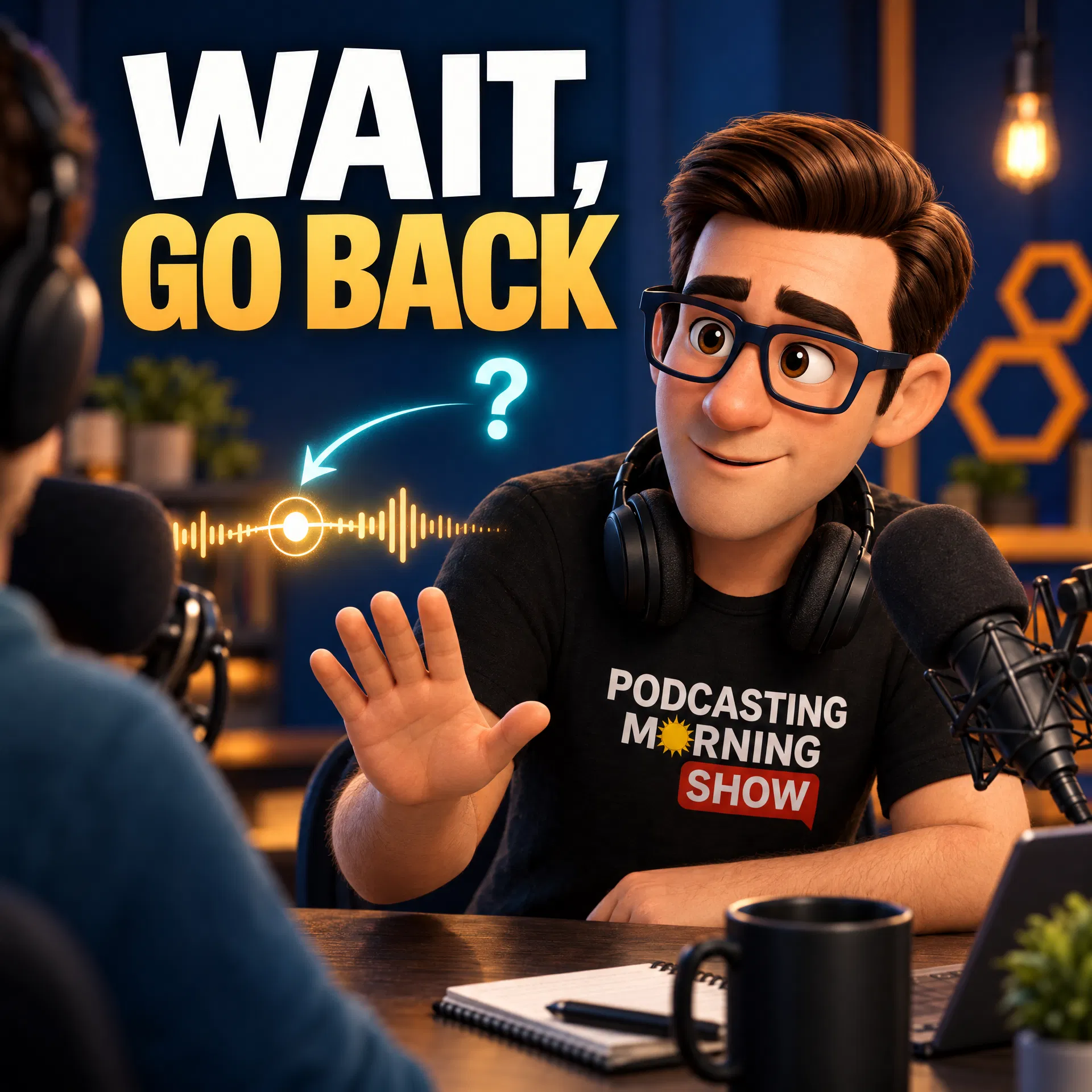
🎙️ Wait, Go Back
In my latest Reel, I act out a moment you may have heard in a podcast interview.
The guest says:
“Honestly, that was probably the hardest year of my life.”
The host responds:
“Okay, great. So my next question is…”
As a listener, I’m still back at “the hardest year of my life.”
"What happened?"
"What made it so hard?"
"How did you get through it?"
There could be a whole story there. The conversation moves on before we get to hear it.
I understand how that happens. You’ve prepared questions. You’re watching the clock. You want to cover everything you promised yourself you’d cover. While your guest is answering, you’re checking what comes next.
That next question can pull your attention away from something worth exploring.
Sometimes, a simple follow-up opens the conversation:
“What happened?”
“Why was that so hard?”
“Can you take me back to that moment?”
You don’t need to know where the answer will lead. Your curiosity gives you a reason to ask.
When a guest says something that makes you curious, give that curiosity a little room. Your listeners may be wondering the same thing.
Watch the Reel: https://www.instagram.com/reels/Dd1q-BSOMYv/
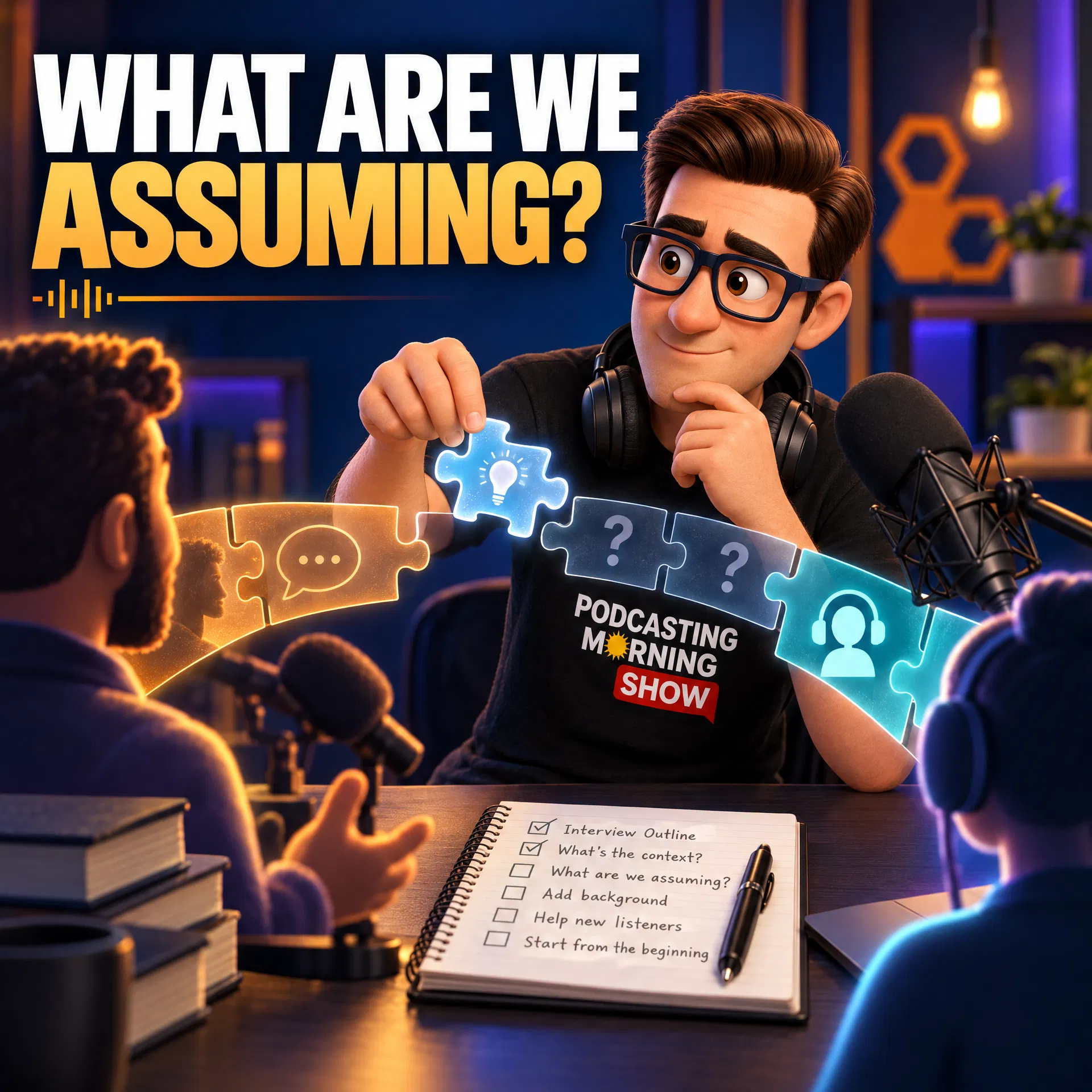
🧠 What Are We Assuming?
I’m working on a new podcast called Community Makes Us, coming this December. It explores how community changes people, what makes those changes possible, and what those experiences teach us about building and leading communities.
One of my guests is my lifelong friend Jonah Berger. We’ve known each other since our days at Camp Ramblewood, so I bring years of shared history into a conversation with him.
While reviewing the prepared interview questions, I noticed that some assumed the audience already knew his story.
I could see why a question mattered. A person listening for the first time might need several pieces of information before they could follow it.
That was a useful reminder for me.
Guest familiarity can make us skip the setup.
Sure, you don't know all of your guests personally but a pre-interview (or even extensive guest research) can create that familiarity, too.
Your guest tells you about a business that failed, a difficult year, or a decision that changed their life. You hear the details, ask questions, and make notes. By the time you record, that story is already in your head.
But your audience is hearing it for the first time.
So when you ask, “What did that experience teach you?” you might be jumping to the lesson before listeners have heard the experience.
Sometimes, a brief setup helps:
“You mentioned in our pre-interview that you almost closed the business. What was happening at the time?”
Other times, the question itself can invite the guest to unfold the story:
“Take me back to when you first realized the business was in trouble. What happened?”
You may already know the answer. Asking gives your guest a chance to bring the listener into that moment.
Use what you learned in the pre-interview to help your audience discover the story.
For Jonah’s episode, I’m recording a separate introduction to establish some background, including our relationship. Within the interview, I also want the questions to give him room to tell the story from the beginning.
That’s something you can check in your own show:
What does my listener need to understand before this question or answer will mean something to them?
It might take one sentence. It might take a follow-up. Sometimes, you need to back up and ask how the whole thing started.
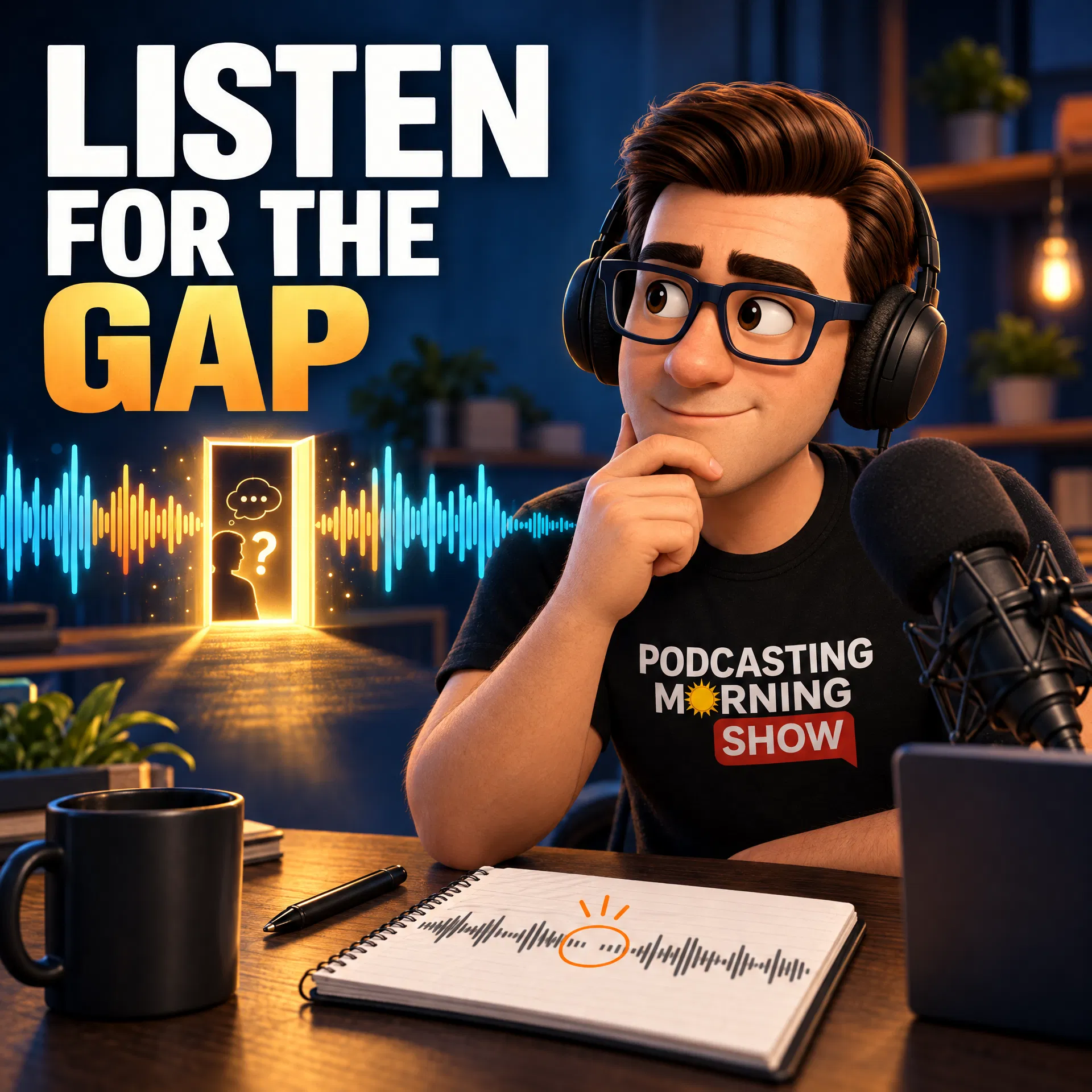
🎧 Listen for the Gap
Listen to ten minutes of one of your recent interviews as though you’re hearing your guest for the first time.
Notice moments like:
“That changed everything.”
“I almost quit.”
“We learned that the hard way.”
“I’ll never forget what she said.”
Did you explore what happened? Did listeners have enough background to follow the story?
Pick one moment where you wanted more.
If you’re still editing, look for a way to add the missing context. If it’s already published, use that moment as a reminder to pause and follow your curiosity in the next interview.
Follow the question your listener is probably asking.
🎧 From the Podcasting Morning Show Archive
Want to spend a little more time with this topic? Here are two conversations worth revisiting.
Episode 468: The Most Underrated Skill Every Podcaster Needs
Ashley describes how hosts can miss something valuable while rushing to the next question. I build on that with a conversation about recognizing when to go deeper and letting curiosity guide your follow-up.
Start around 16:09 for active listening, then 17:06 for my take on noticing those moments.
Watch or listen: The Most Underrated Skill Every Podcaster Needs
Episode 536: How to Create Podcast Interviews People Remember
Dave Jackson joined the Podcasting Morning Show team to talk about researching guests, preparing for interviews, and asking stronger follow-up questions.
It’s a fitting companion to this week’s Reel, with practical advice on bringing curiosity and preparation into the same conversation.
Two places to start: 4:28 for pre-interview preparation and 19:53 for common mistakes during an interview.
Watch or listen: How to Create Podcast Interviews People Remember
Thanks for reading! I’m grateful to be connected with you and to be part of your podcast journey.
All my best,
👋Marc Ronick
This content was composed with assistance from OpenAI.
Some of the links in this newsletter may be affiliate links, meaning we earn a small commission if you make a purchase through them at no extra cost to you.